Creative Writing
It is very different from technical writing. It may be commentary. It may be informational. It may be popular culture, imaginative story-telling, fun, or wild ideas.
Thoughtful
Commentaries
This section presents serious issues. Note: No political parties are named.
Political Suicide
by Steven Wells
Politicians and newscasters refer to “political suicide” as an excuse for the lack of progress toward a necessary political, legal, or societal goal. Why should a politician risk his career, alienation of his cohorts, and public scorn just to do the right thing? Indeed, why?
I submit that such a politician is a depraved coward, and that anyone who uses the term political suicide as reasonable for voting against good legislation or avoiding its creation is either likewise depraved, ignorant, or recklessly stupid.
Several election cycles ago I ran for the US House of Representatives, and with due reflection considered what would actually happen to me if I voted for good legislation or to repeal bad legislation, particularly if other representatives, the media, or the general public decried my vote as political suicide. I’d get bad press, and I probably wouldn’t get reelected. I might even be impeached. Just for doing the right thing.
I submit that such a politician is a depraved coward, and that anyone who uses the term political suicide as reasonable for voting against good legislation or avoiding its creation is either likewise depraved, ignorant, or recklessly stupid.
Several election cycles ago I ran for the US House of Representatives, and with due reflection considered what would actually happen to me if I voted for good legislation or to repeal bad legislation, particularly if other representatives, the media, or the general public decried my vote as political suicide. I’d get bad press, and I probably wouldn’t get reelected. I might even be impeached. Just for doing the right thing.

A simple thought experiment informs my morality. I imagine that I’m standing in front of an audience of others who had put their well-being or their lives on the line for their jobs, with dire consequences. Convenience store clerks who had been shot in robberies, suffering permanent injury. Firefighters whose faces had been burned into scarred horrors. Soldiers who had lost arms or legs or their sight or their sanity. Imagined spirits of those who died trying to do the right thing.
I stand before that ghastly group and tell them, “I cannot do good because that would be political suicide.” Not real suicide—I’d still be alive. Physically unharmed—hale and hearty.
“I cannot do the right thing. Someone might speak inhospitably of me. I might lose my cushy job full of riches and power.”
After offering such an obscenity, I’d wait for those in my audience who were still physically able to beat me to a bloody pulp. And I’d tell them they were doing the right thing.
Consider your politicians who avoid doing good because to do so would be political suicide. Now, go reelect those immoral cowards and wonder why things don’t improve.
Limiting the First Amendment in the Style of anti-Second Amendment Rhetoric and Law
Satire by Steven Wells
The government has long recognized that the pen is mightier than the sword. Centuries ago, the printing press amplified the pen to create printed books. Further, Gutenberg printed the first movable-type book: his Bible, a religious book. Awesome new technology of laser-guided printing can place this mighty power in the hands of almost anyone, threatening great danger. We must keep this power out of the wrong hands, away from the mentally unbalanced and religious fanatics.
Many unnecessary and painful injuries and brutal deaths, including deaths of children, have resulted from the improper use of doctrines contained in religious books: beheadings, crucifixions, selling daughters into slavery, stoning, and burning at the stake.
Therefore, for the public safety, we require a 10-day waiting period between the date of purchase and the date on which someone may physically acquire a prayer book or other religious book, and only from a licensed dealer. This provides sufficient time for authorities to verify preregistered purchasers against federal and state databases. It is crucial to close the loopholes by which attendees at open religious shows and events might purchase a prayer book without a background check.
Special application must be made and approved to openly carry a prayer book, otherwise such a book must be transported in a locked safety container. As a further safety measure, no such books may contain more than 10 pages. That number is quite sufficient for any peaceable purpose.
High capacity prayer books containing more than 10 pages or books printed in unusually large typefaces are prohibited. Such high-capacity books that were previously owned had been grandfathered in. But the new laws going into effect make these illegal. You must turn in any such books currently in your possession by January first or face a substantial fine and imprisonment.
We prohibit the sale to ordinary citizens of prayer books of the types normally used by professional clergy, in which many words are released with a single reading of a sentence. There is no reason that an ordinary citizen needs to release more than one word at a time. Regardless, we ignore the distinction between semi-read content and fully-read content.
Certain words carry great weight and are dangerously offensive; some are hollow, pointed, defensive words and equally dangerous, so these must be prohibited from use by private citizens; that is, only active military service members and authorized police officers may use those words. Likewise prohibited are civilian purchases of more than three religious books of any type, whether civilian or clergy, in any one month period, except by licensed authorized dealers.
Ad nauseum!
Voting Rights and Wrongs
by Steven Wells
We hear the fervent mantra, “Get out the vote!” Politicians and media castigate the 36% of registered voters who did not vote in the 2024 presidential election. This is misguided. In what other endeavor would a sensible person seek the opinion of the ignorant, the thoughtless, the lazy? Yet we should hand over national policy to such riffraff. That is the height of foolishness and irresponsibility.
We discount the small percentage who actively chose not to vote because they could not countenance any of the available candidates. Such nonvoters made a reasoned and moral choice, and they are not a part of the great unwashed masses under discussion here.
The Founding Fathers specified that one should be a landowner in order to vote. This was not adopted as a point of discrimination, but under the view that land ownership set a standard of voting from a background of education and intelligence. The issues of actually owning land, women voting, enfranchising minorities, and the like were fixed long ago, but we should consider the underlying idea.
Political correctness, more than anything else, prohibits a requirement of some level of civics knowledge in order to vote. But, watch any man-on-the-street interview of college imbeciles, even ivy-league imbeciles, to see the value of that concept. Or cringe over late night shows or internet videos that poll would-be voters about why they thought the President made a good choice in nominating Marty McFly, John Dillinger, or Sammy Hagar to the Supreme Court. Their ignorant explanations are terrifying. Oh, no! They vote.
Other than the intellectually and morally bankrupt (one party’s leadership just jumped up and waved their hands), who would want gullible idiots to vote? Who would attempt to produce as many votes as possible for their political doctrines from persons who are too stupid or ignorant to think clearly? A certain party, of course, must think that Blacks and Hispanics owe them a vote but are too stupid to be able to obtain a free ID, and that’s why they object so strenuously to voter ID laws. (But we all know, or should know, that Blacks and Hispanics are just as intelligent and capable as any other racial or ethnic group.) There are already mechanisms in place to safeguard the voting rights of persons so physically infirm that obtaining an ID might be difficult, including voting with a mail-in ballot and casting a provisional ballot should an ID be forgotten or misplaced.
The purpose in fighting against the requirement of an established voter ID is twofold:
- Flood elections with the vote of fools who can be persuaded easily by promises of magic free goods and services, or by the ethically depraved who feel that they should receive unearned and undeserved values at the expense of those who did earn and deserve them.
- Flood elections with votes for their causes by persons who are not entitled to vote; for example: persons who have already voted, felons, non-citizens, dead persons, and users of stolen identities.
Only a person who embraces voter fraud could regard voter IDs as evil, while trying to make all other IDs mandatory—as with boarding an airplane. Only a person who embraces voter fraud could offer hostility to periodic review of voter rolls that might eliminate the dead, persons who have moved out of their voting districts, and criminals who have become ineligible to vote.
Information
Language
This section provides terminology information.
What Is the Difference Between Beer and Ale?
by Steven Wells
In many discussions of beer, there is rarely mention of the fermentation process, but it is crucial here.
But first, let’s get some “bitter” talk out of the way. The bitterness comes from the types of hops used in the brewing process. Any beer or ale can be made as bitter or not as the brewer desires. It’s based on the alpha acid content in the hops used. Beers are often brewed with stronger hops than with ales, but that has nothing to do with the fermentation process.
BeerIt’s the generic term for malted barley beverages that have been brewed for approximately 10,000 years. Barley that got damp starts germinating. Roast and cook it in water, especially with hops, let it ferment, and you get a potable liquid. That means it stays safe to drink, unlike contaminated water supplies that make you sick or degrade your health. Why did ancients drink beer (and wine)? Because the alcohol (from fermented polysaccharides) killed bad microorganisms, as does the germicidal hops. They didn’t know the chemistry or biological causes, they just knew the phenomenology. Drink this brewed stuff and you’re fine, drink this water over here and you get sick. The barley from beer also provides protein. Less so in modern major brand beers.
AleIt’s just another type of beer. But the main difference comes from the fermentation. The yeast that breaks down carbohydrates to produce alcohol falls into two large groups, the ale top-fermenters that sit at the top of the pre-beer (it’s called wort) and the bottom fermenting yeasts. They tend to sit at the bottom of the wort to produce beer.
Top Fermenting AleThe top fermenting yeasts “like” warm temperatures which speed the chemical processes. An ale might be drinkable in weeks. That’s good.What’s the downside? Microorganisms that tend to spoil the ales also like warm temperatures, so it’s harder to keep your brew clean. Bacterial contamination can make the ale taste bad. Pour a bad ale, and it will foam like crazy, producing a huge head that dissipates almost immediately. It will have flavor notes of sour butterscotch from diacetyl-diketone. Fortunately, the ale won’t make you sick. The alcohol protects you, but it’s not a happy beverage experience. Modern ale breweries are usually very particular about keeping their materials and equipment clean, so there are many delightful ales available.
Bottom Fermenting BeerBottom fermenting yeasts are happy at colder (cellar) temperatures. The bad-guy microorganisms don’t grow so well at cooler temperatures, so it’s much easier to keep the wort clean (uncontaminated). Great.What’s the downside? At colder temperatures, the fermentation process is much slower. It takes a lot longer to brew the beer. It may be months before the beer is drinkable. Many such beers are lagers. The term lager means to lay down. You lay your beer barrel (or other container) down in the cellar and start to consume it half a year later.Ever hear of “Beechwood aging?” It’s really the opposite of aging. Sterilized beechwood slivers are placed in the wort so that yeast has larger surfaces to cling to. With larger surface areas, the fermentation goes faster, even at cold temperatures. The brewing company uses this process to force the yeast to work faster and get the beer out the door in a few weeks. The marketing name makes you assume the sped-up manufacturing is akin to the slow aging of fine wine or scotch, but it’s more like the “aging” of Alka-Seltzer in a glass of water.That’s the basics. There are a thousands of ways to tweak beer recipes. Let’s get back to hops. The wort is cooked with hops that control the amount of bittering. But other hops can be tossed in later that impart interesting hop flavors unrelated to bittering. Still later, other hops can be tossed in to impart interesting aromas to the beer or ale. The brewer controls (or tries to control) many variables to make a good beverage. What kind of barley, how is it roasted, what kinds of hops, even what kinds of source water? Brewing yeasts work better in water with high mineral content, especially calcium.
SummaryThis was all just off-the-cuff from what I learned doing home-brewing years ago. There is a huge amount involved in producing beer at home, in a microbrewery, or at major national and world brand producers. In only 15 years, Bavarian brewery Weihenstephan Brauerei will have been brewing beer for 1,000 years! I can hardly wait. Meanwhile, enjoy your beverages wisely.
From a Joke About Chromosomes
by Steven Wells
How can you tell male chromosomes from female chromosomes? Pull down their genes!
That’s just word play. Jeans sounds like genes. But why is that?
Jeans is a novel spelling based on the sound of the English vulgarization of Gênes, which is the French name of Genoa. That’s the Italian port city, 75 crow's-flight miles from modern France, that was a source of the heavy sailcloth used for making jeans. Jacob Davis invented the sturdy work pants and Levy Straus marketed them for miners of the 1849 California Gold Rush. Dye from the indigo plant produced the Blue Jeans color.
The transformation from Gênes to Jeans is similar to the way the military General Purpose vehicle or G.P. shortened in speech from gee-pee to jeep.
Another major sailcloth source was Nîmes, France. Pronounced Neem, it's not quite a port, being about 20 miles from the coast. Its serge cloth, serge de Nîmes, became serge denim and simplified to the modern word denim. Denim cloth was used since the mid-1600s.
For completeness, another word for those heavy pants comes from India: Dungaree, circa 1605-15, from Hindi dungrī, a kind of coarse cloth.
Alphabetical Order of Symbols
This section provides specialized computer information that’s not easy to find.
by Steven Wells
How do special characters alphabetize in Windows File Explorer?
I tested several special leading characters in file names to place them earliest in a folder for Windows 7 (and later). I can’t speak to other operating systems. The following characters sort in this “alphabetical” order:1 ( ) Space2 (-) Hyphen3 (!) Exclamation point4 (_) Underscore5 (~) Tilde6 [The rest of the A-Z alphabet and numerals]*7 (ο) [Some presentable Unicode character]
You may want to place a file or folder at the end (beyond Z) rather than at the beginning, preferably with a presentable looking leading character. My preference is a Cyrillic Small Letter O, Unicode 03BF (Decimal 0959), which looks like a hollow bullet; something like (o LastTemp). For readability, I like to place a space between the special leading character and the rest of the name, but you need not do that. To place that character at the beginning of a file name, either within Word (SaveAs), or within a Windows folder (F2), place your cursor before any existing first character, hold the Alt key, type the decimal value 0959 on the keypad not the number keys above the letter keys on the keyboard, and release the Alt key. You can omit the leading zero and just use “959”.
* Remember when using numerals as the leading characters of file names, that each character is considered separately, not as a number value. So “12 Test.doc” comes before “2 Test.doc” keying on the first characters 1 and 2 rather than the value of 2 vs 12. A leading zero would place them in numeric order: “02 Test.doc” comes before “12 Test.doc”.With trailing numbers, a space may sort before nothing. Really!Try “Test.doc”, “Test1.doc”, and “Test 1.doc”. They sort in this order (thanks Microsoft!):Test 1.docTest.docTest1.doc
Popular Culture
The Movie vs the Book
This section welcomes popular culture.
Did the “I, Robot” Movie Follow Isaac Asimov’s Book?
By Steven Wells
Vinter & Goldsman’s screenplay of the I, Robot movie bears little resemblance to the book. The rampaging robots and the radical destruction shown in the movie do not exist in the book. All but two of the book’s stories involve robots that obey the well known Three Law of Robotics, with primacy of the First Law.
To be clear:
The Three Laws of Robotics
From the fictional “Handbook of Robotics, 56th Edition, 2058 A.D.”
- A robot may not injure a human being or, through inaction, allow a human being to come to harm.
- A robot must obey the orders given it by human beings except where such orders would conflict with the First Law.
- A robot must protect its own existence as long as such protection does not conflict with the First or Second Law.
The stories present subtle issues relating to these laws, which the robots indeed follow.
The story Little Lost Robot provides interesting complications where an NS-2 (Nestor) series robot had been manufactured with a modified First Law, No robot may harm a human being.
The book’s final story The Evitable Conflict depicts minor economic anomalies from an effectively expanded First Law, elsewhere called The Zeroeth Law because of its precedence over the other three: A robot may not injure humanity or, through inaction, allow humanity to come to harm. The story revolves around the wider philosophical issue of whether a culture under the profound influence of benevolent computing machines leaves humanity in control of its own destiny, or if humanity ever had true control of its destiny under inevitable conflicts.
This last issue is the key theme behind the 1970 movie, Colossus: The Forbin Project, in which the Colossus computer system (and its Russian counterpart, Guardian) kill a relatively few persons to achieve a peaceful humanity that will live productively without war.
Best non-Bond Theme
A matter of taste.
What’s the Best James Bond Movie Theme Song from a non-Bond Movie?
By Steven Wells
- It’s a matter of taste, thus this ancient Latin phrase: DE GUSTIBUS NON DISPUTANDUM EST. (They didn't have lower case letters.) That is literally, “About tastes, it should not be disputed.”
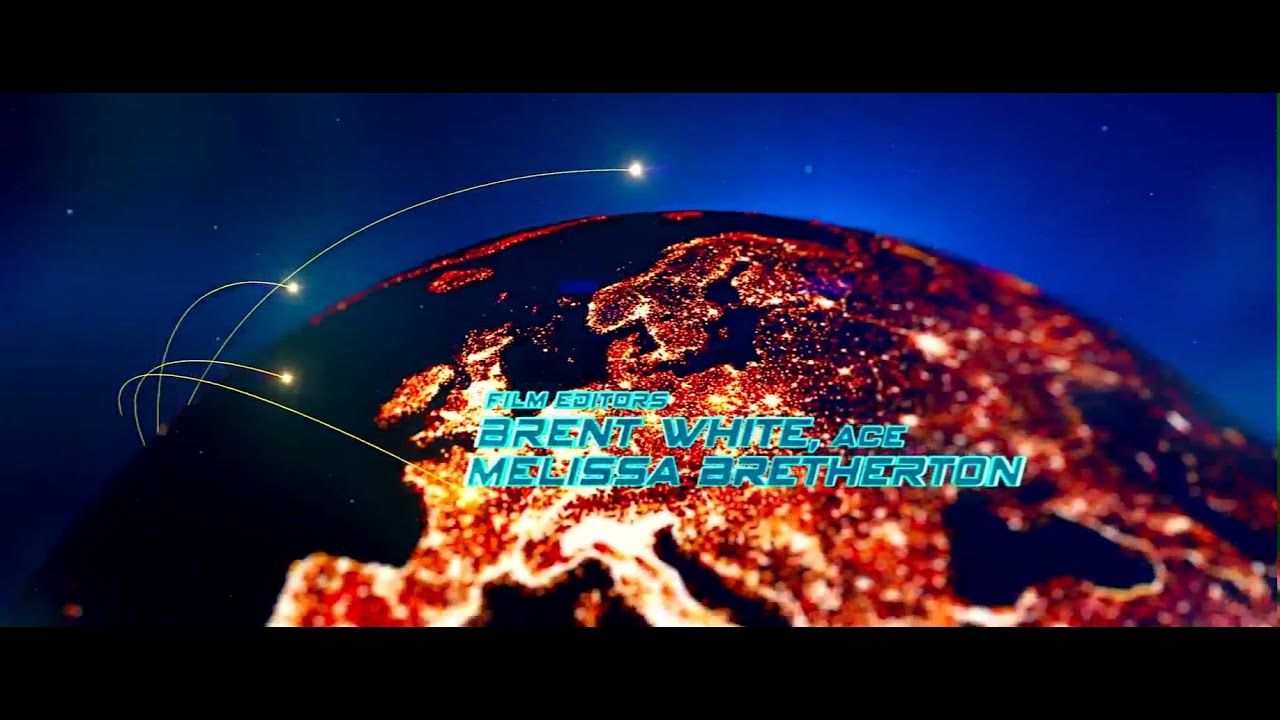
- I assert the best non-Bond song is Who Can You Trust sung by Ivy Levan in the action comedy Spy (2015) directed by Paul Feig.
- You can judge for yourself. Play the Spy opening credits (1:33).
Video can’t be displayed
And this plays the Who Can You Trust song video (4:54).

Video can’t be displayed
Family History
Nuclear and Ion Rockets
Does capability run in the family?
by Steven Wells
In a recent online discussion, someone suggested that a “nuclear powered rocket” is a great idea. I felt obliged to mention my late Uncle Marty.
He filed his “Nuclear rocket engine” patent US 3383858 A in 1956 on August 9: http://www.google.com/patents/US3383858
I still have a have a copy of the June 1956 paper he wrote (with Mrs. E. C. Orr) for the Rocketdyne Division of North American Aviation, entitled:
Project Snooper: A Program for Reconnaissance of the Solar System with Ion Propelled Vehicles
It’s filled with details about ion currents, equations of motion, propellant properties for the various alkali elements, and so on.
In addition to his incredible brilliance and inventiveness in many fields, he was a kind and truly wonderful person according to everyone who knew him, including me.
Fanciful Background
My personal history is a mix of fact and fancy.
Originally a laser physicist and later an AutoCAD guru, I appear before you now as a senior technical writer and creative writer. In my early years, I combined my ubiquitous interest in computers with their natural concomitant, sleep deprivation, embracing this essential coupling that would play so large a part in my current work and lifestyles. Indeed, this pairing is so fundamental to our modern information technology that they seem well nigh as inseparable as Caster and Camber, the ancient twin Greek gods of wheel alignment, who bless my beautiful red Corvette.
One of the twin gods of wheel alignment, Camber, was paired with computers and immortal. His brother, Caster, is the one paired with sleep deprivation for their common intimacy with mortality.
Exiled to Earth from my home planet, I now live within a tornado centered on Silicon Valley, where I battle with the forces of space, time, and gravity to eke out a miserable existence, or revel in the glories of god-like triumph, whichever expires last—your mileage may vary.
My home space is shared by a clowder of emergency backup cats, unwanted arachnids, tintinnabulations of disc-based media, multiple spice-racks, mounds of kitchen utensils, myriad electronic devices, and useless trivial information saved on tons of paper hiding in file folders, which in their turn lurk within file cabinets awaiting audits and perdition.
Creative Oddments
Work and Play
Creative writing as historical fact, comedy, varied articles, and frenzied fun.
Click a blue button to open the document in a new browser tab.
This started as a small entertainment piece to accompany telephony courseware. It grew in scope after meticulous research into historical detail.
PayPal staff includes many knowledgeable folks. The pair of names involved in a Q&A broadcast suggested my adaptation of an old comedy routine made popular by Abbott and Costello.
Santa Clara Corvettes publishes a monthly newsmagazine. Contributors made last minute submissions on publication day, typically leaving the Publications Director, me, no more than an hour to fill the available space with my own column.I had to come up with a topic and research, write, format, and proofread it before creating the entire issue’s PDF and rushing to the printer. This is an extract of a year’s articles.
A short contract job at Cisco Systems under their Mobile Worker Initiative invokes a creative story of Silicon Valley madness.